Blog
Top Admission CRM for Schools, Colleges 2026
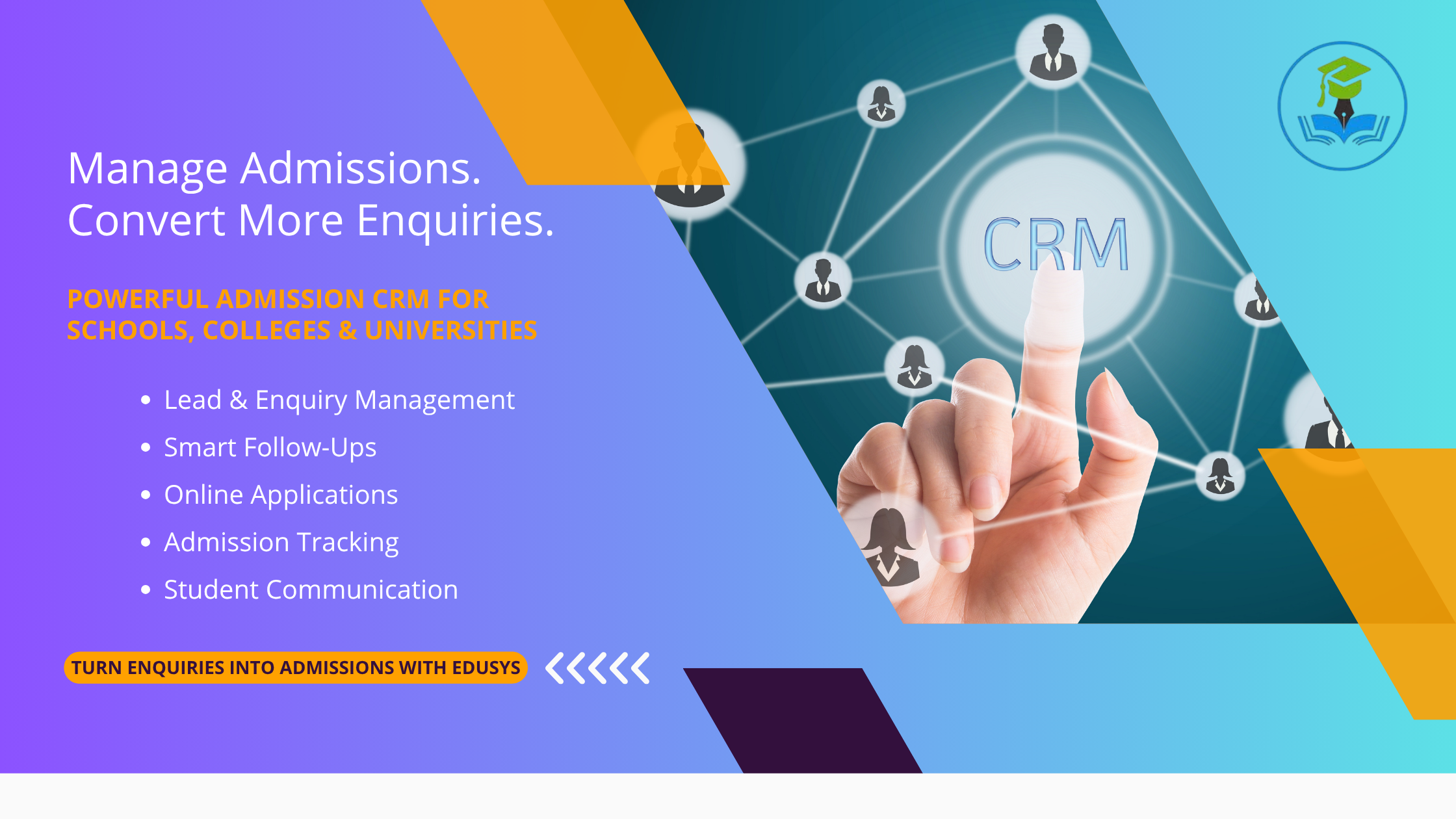
Top Admission CRM: How to Choose the Right Admission Management Software for Educational Institutions
Choosing the right top admission CRM can make a significant difference in how schools, colleges, universities, and coaching institutes manage student enquiries and convert prospects into admissions.
An effective admission CRM does more than store contact information. It helps institutions capture enquiries, organize prospective student data, manage follow-ups, track applications, communicate with candidates, and understand the overall admission pipeline.
For educational institutions handling hundreds or thousands of prospective students, having a centralized system can reduce manual work and provide better visibility into the admission process.
What Is an Admission CRM?
An admission CRM is a software platform designed to help educational institutions manage prospective students throughout the admission journey.
It typically brings enquiry management, lead tracking, follow-ups, application management, communication, and reporting into one centralized system.
Instead of maintaining prospective student information across spreadsheets, notebooks, emails, and different communication channels, an education CRM gives admission teams a structured way to manage the complete prospect lifecycle.
For example, when a student enquires about a course, the institution can record the enquiry, assign it to an admission counsellor, schedule follow-ups, track communication, and monitor whether the prospect eventually submits an application.
Why Do Educational Institutions Need an Admission CRM?
The admission process involves multiple stages, from the first enquiry to application submission and final enrolment.
Without a centralized system, admission teams may face challenges such as:
• Missed follow-ups
• Duplicate enquiry records
• Scattered student information
• Difficulty tracking counsellor performance
• Delayed communication
• Poor visibility into admission status
• Manual reporting
• Difficulty identifying high-potential prospects
An admission management system helps bring these activities together and makes the process more organized.
EduSys, for example, provides enquiry and lead management capabilities that allow institutions to record and communicate with prospective students through channels such as email, SMS, and telecalling.
What Features Should You Look for in the Top Admission CRM?
The best solution depends on the institution's size, admission process, courses, number of enquiries, and communication requirements. However, several capabilities are particularly important.
1. Enquiry and Lead Management
A strong CRM should allow admission teams to capture and organize enquiries from different sources.
The system should make it easy to view prospect information, enquiry status, course interest, follow-up activities, and conversion progress.
This provides admission counsellors with a clear picture of which prospects require immediate attention.
2. Follow-Up Management
Generating enquiries is only the beginning.
Regular follow-up is essential for converting prospective students into applicants and enrolled students. An admission CRM can help counsellors track previous conversations, upcoming follow-ups, and the status of each prospect.
This reduces the possibility of enquiries being forgotten or left unattended.
3. Online Application Management
Modern institutions increasingly allow students to submit applications online.
A suitable student admission management system should simplify registration, document submission, application tracking, and other admission activities.
EduSys supports online registration, digital document records, application tracking, course allocation, and application-status monitoring as part of its admission management capabilities.
4. Document Management
Admission departments often handle large numbers of documents.
A digital system can help institutions maintain student documents in a centralized environment rather than relying entirely on physical files.
This can make document verification and retrieval more efficient.
5. Communication Management
Communication plays an important role in admissions.
Institutions may need to send application updates, admission notifications, reminders, fee information, and other important messages.
A good platform should support structured communication through available channels such as email and SMS.
EduSys includes communication capabilities and supports email/SMS-based notifications within its admission workflow.
6. Application and Admission Tracking
Admission teams need to know where every applicant stands.
A centralized system can help track stages such as:
Enquiry → Follow-Up → Application → Document Verification → Selection → Admission → Fee Payment
This gives management a clearer view of the admission pipeline.
7. Reports and Analytics
Reports can help management understand admission performance.
Useful reports may include:
• Total enquiries
• Follow-up status
• Applications received
• Course-wise enquiries
• Admission conversions
• Pending applications
• Fee collection
• Counsellor performance
EduSys provides visual dashboards and reports covering areas such as enquiry status, fee status, attendance, and other institutional activities.
How Can an Admission CRM Improve Student Enrolment?
An admission CRM can improve enrolment by giving admission teams better control over the prospect journey.
For example:
Step 1: A student submits an enquiry.
Step 2: The enquiry is recorded in the CRM.
Step 3: An admission counsellor follows up with the student.
Step 4: The counsellor records communication and updates the enquiry status.
Step 5: The student submits an application.
Step 6: Documents are collected and verified.
Step 7: The institution completes the admission process.
This structured approach helps institutions reduce information gaps and maintain visibility throughout the admission cycle.
Is an Admission CRM Useful for Schools and Colleges?
Yes. An admission CRM can be useful for schools, colleges, universities, coaching institutes, and other educational organizations that regularly handle student enquiries and applications.
For colleges, for example, the system can connect enquiry and lead management with admission, onboarding, document verification, fee collection, and other administrative processes. EduSys describes its college ERP as supporting enquiry/lead management and follow-ups as part of the admission and onboarding workflow.
For universities, an integrated platform can connect admissions with broader academic and administrative functions. EduSys's university solution combines ERP, SIS, LMS, and CRM capabilities within a unified platform.
What Is the Difference Between an Admission CRM and an Admission Management System?
An admission CRM primarily focuses on managing prospective students, enquiries, communication, follow-ups, and the conversion journey.
An admission management system can cover a broader set of activities, including applications, document management, admission processing, course allocation, fee collection, and application tracking.
For many institutions, combining both capabilities in one platform can provide a more connected admission workflow.
How Does an Admission CRM Help Admission Counsellors?
An admission CRM gives counsellors access to organized prospect information in one place.
Instead of manually searching through spreadsheets or messages, counsellors can identify:
• Who made the enquiry
• Which course they are interested in
• When they were contacted
• What was discussed
• What follow-up is required
• Whether an application has been submitted
• What stage the prospect has reached
This can help admission teams prioritize their work and improve follow-up consistency.
How Can Educational Institutions Choose the Right CRM?
Before selecting a platform, institutions should evaluate the following:
Scalability
Can the system handle increasing numbers of students, enquiries, courses, and branches?
Ease of Use
Can admission counsellors and administrators use the platform without complicated processes?
Integration
Can the system connect with existing institutional software, communication tools, payment systems, or other platforms?
Mobile Accessibility
Can staff access important information from smartphones, tablets, and computers?
Reporting
Does the platform provide useful dashboards and reports for management?
Security
Does the solution provide appropriate protection for sensitive student and institutional information?
Complete Admission Workflow
Can the platform support the journey from enquiry through application and admission rather than solving only one part of the process?
Why Choose an Integrated Education ERP with CRM Capabilities?
For institutions managing multiple departments, using separate systems for admissions, student records, fees, academics, HR, and communication can create disconnected data.
An integrated education ERP can bring these functions together.
EduSys positions its platform as an all-in-one educational management solution covering school, college, university, and coaching institute requirements. Its platform includes admission-related capabilities alongside student management, fee management, academic functions, communication, reporting, and other institutional operations.
This approach can help institutions create a connected digital ecosystem instead of managing every department independently.
Why Choose EduSys for Smarter Admission Management?
EduSys goes beyond basic admission CRM functionality by combining advanced enquiry and lead management, online admissions, application tracking, document management, automated communication, fee management, analytics, and complete education ERP capabilities in one integrated platform. With EduSys, institutions can streamline their entire admission journey-from the first student enquiry to successful enrollment-while giving admission teams the tools they need to improve efficiency, follow-ups, and conversions.
Ready to transform your admission process? Explore EduSys and discover how its advanced features can provide a complete, scalable solution for modern educational institutions.
Frequently Asked Questions
What is the best admission CRM for educational institutions?
The best admission CRM depends on the institution's requirements, admission volume, workflow, budget, integrations, and reporting needs. Institutions should compare enquiry management, follow-up, application tracking, communication, reporting, scalability, and ease of use before making a decision.
What does an admission CRM do?
An admission CRM manages prospective student enquiries, lead information, follow-ups, communication, applications, and admission-stage tracking. It helps admission teams organize and monitor the student acquisition journey from initial enquiry to enrollment.
Can an admission CRM be used by colleges?
Yes. Colleges can use admission CRM functionality to manage enquiries, follow-ups, applications, document verification, onboarding, and other admission activities. EduSys provides these capabilities within its college management platform.
Can universities use an admission CRM?
Yes. Universities can use CRM and admission management capabilities to organize prospective students, applications, course allocation, document verification, and admission workflows. EduSys's university platform includes online admission management alongside broader university ERP functions.
Does admission CRM improve lead follow-up?
Yes. By centralizing enquiry information and follow-up activities, a CRM can help admission teams identify pending prospects, maintain communication records, and prioritize follow-ups.
What should an institution consider before buying admission software?
Institutions should evaluate features, usability, scalability, security, reporting, communication capabilities, integrations, mobile accessibility, implementation requirements, and total cost.
 04 Sep 2026
Useful Links
Social media