Blog
School Transport Management System: Benefits & Features
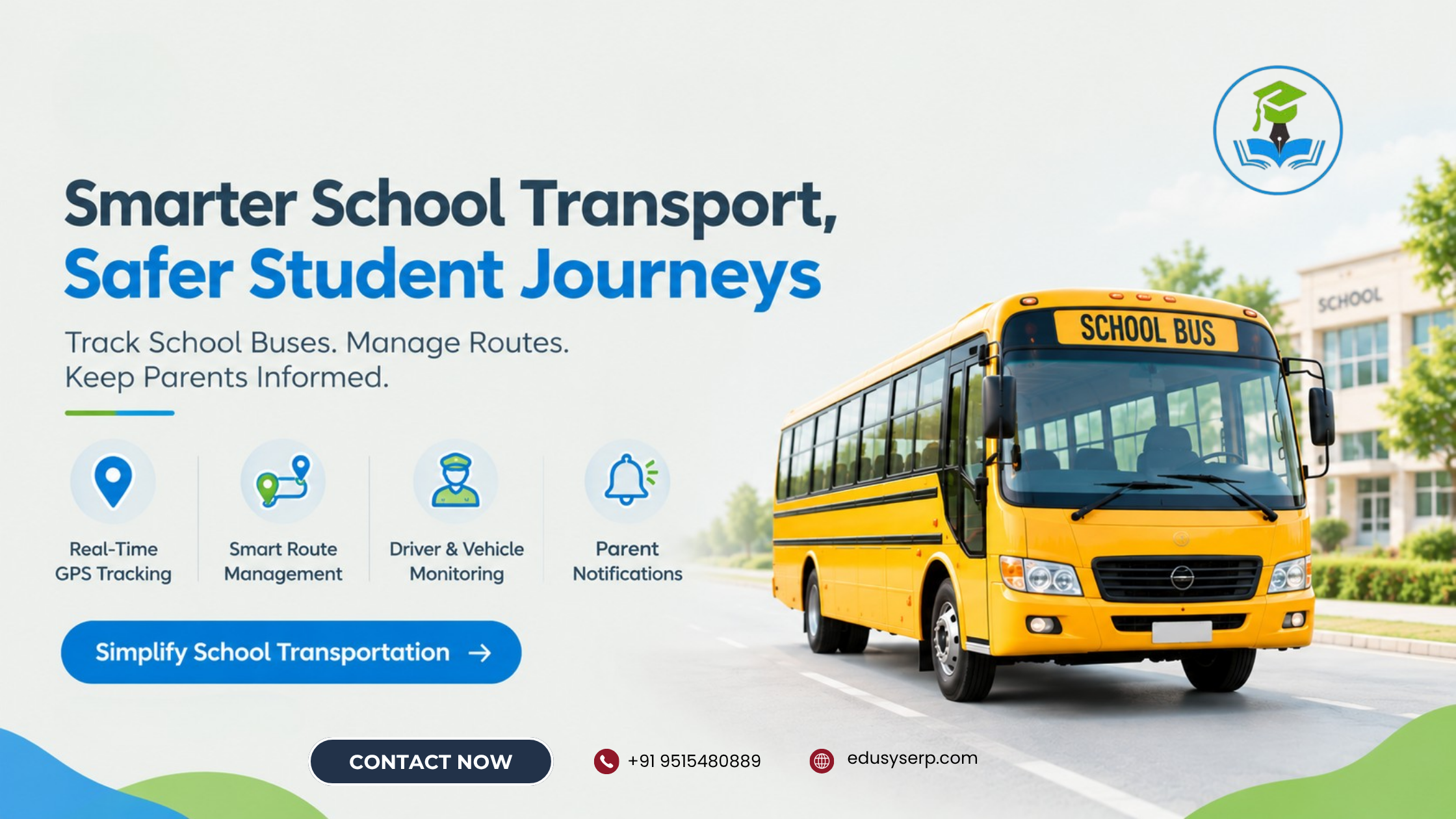
School Transport Management System: Improving Student Safety and School Bus Operations
Every school day begins with an important responsibility: ensuring students travel safely between home and school. Managing buses, drivers, routes, and pickup schedules can become challenging, particularly for institutions operating multiple vehicles.
Traditional transportation processes often depend on paperwork, phone calls, and manual coordination. These methods can lead to communication gaps, scheduling confusion, and delays.
A School Transport Management System helps educational institutions organise daily transportation, monitor vehicle movements, improve parent communication, and maintain accurate operational records.
With digital transportation tools, schools can create a more organised, transparent, and reliable commuting experience for students, parents, and staff.
What Is a School Transport Management System?
A School Transport Management System is a digital platform designed to manage and monitor transportation activities within educational institutions. It helps administrators coordinate vehicle assignments, driver information, student pickup points, travel schedules, and maintenance records through a centralised system. When integrated with GPS technology, it can also provide real-time visibility into school bus movements.
Instead of handling multiple registers and spreadsheets, transport teams can access essential information from one platform, reducing administrative effort and improving operational coordination.
Why Do Schools Need Transport Management Software?
As student enrolment increases, transportation requirements become more complex. Schools must manage changing routes, vehicle availability, student allocations, and communication with parents.
Challenges of Traditional School Transportation
Common transportation challenges include:
• Difficulty monitoring school bus locations
• Unexpected delays and route changes
• Manual driver and vehicle record management
• Limited communication with parents
• Inefficient route planning
• Difficulty tracking vehicle maintenance schedules
A digital transport solution helps schools address these challenges through better information management, automation, and real-time monitoring.
Key Features of School Transport Management Software
Modern transportation solutions combine multiple functions to support safer and more efficient school bus operations.
1. Real-Time School Bus GPS Tracking
A School Bus GPS Tracking System enables authorised administrators to monitor vehicle locations during scheduled journeys.
Parents can also receive relevant bus-location information through connected applications, depending on the system configuration.
This visibility helps families prepare for pickup and drop-off times while allowing transport teams to respond more effectively to delays.
2. Smart Route Planning and Management
Efficient route planning is essential for reducing unnecessary travel and maintaining reliable schedules.
School Bus Route Management Software helps institutions organise routes, assign vehicles, and manage designated pickup and drop-off locations.
Well-planned routes can reduce avoidable travel distances, improve vehicle utilisation, and support punctual transportation.
3. Driver and Vehicle Management
Schools must maintain accurate information about their transportation fleet.
A centralised platform can organise:
• Driver assignments and contact details
• Vehicle registration and seating capacity
• Insurance and document expiry dates
• Fuel consumption and odometer readings
• Maintenance and inspection records
Maintaining updated information supports better planning and helps administrators identify vehicles requiring attention.
4. Parent Notifications and Communication
Communication plays a major role in student transportation safety.
A School Bus Tracking App can provide parents with updates about vehicle movement, arrival estimates, and transportation delays.
Timely notifications reduce uncertainty and help families coordinate daily pickup and drop-off arrangements.
5. Transport Reports and Analytics
Transportation reports help schools understand vehicle usage, route performance, and operational expenses.
By reviewing these records, administrators can identify inefficiencies, evaluate transportation requirements, and make informed decisions about future improvements.
Benefits of a School Bus Tracking System
Introducing digital transportation management can deliver practical benefits across school operations.
Improved Student Safety
GPS monitoring gives authorised users better visibility into vehicle movements and planned routes.
Combined with trained staff, proper maintenance, and clear emergency procedures, tracking technology supports a more accountable transportation environment.
Better Operational Efficiency
Automated records and centralised information reduce repetitive administrative work.
Transport managers can coordinate drivers, routes, and vehicles without relying entirely on manual registers.
Reduced Transportation Costs
Improved route planning and vehicle monitoring can help schools identify unnecessary fuel consumption, inefficient journeys, and avoidable maintenance expenses.
Actual savings depend on fleet size, operating conditions, and how effectively the system is implemented.
Greater Parent Confidence
Reliable transportation updates help parents understand when to expect the school bus.
Better communication strengthens trust between families and educational institutions.
How to Choose the Right School Transportation Management Solution
Selecting transportation software requires more than comparing basic tracking features.
Schools should evaluate whether the platform supports their current operations and future expansion.
Important considerations include GPS tracking accuracy, route management, vehicle records, mobile accessibility, reporting capabilities, data security, and integration with existing school administration software.
Institutions should also assess vendor support, implementation requirements, and compatibility with their GPS devices.
A solution that connects transportation information with student records and parent communication tools can provide additional administrative convenience.
The Role of GPS Tracking in Student Transportation Safety
GPS Tracking for School Buses helps institutions monitor vehicle movement and respond to unexpected transportation changes.
For example, if a bus experiences a delay, transport administrators can review its location and communicate relevant updates to parents.
However, GPS monitoring should complement established safety practices rather than replace them.
Regular vehicle inspections, qualified drivers, safe boarding procedures, and emergency preparedness remain essential for protecting students during daily travel.
EduSys School Transportation Module: Smarter School Bus Management
The EduSys School Transportation Module offers an integrated solution for managing daily school transportation activities. As part of the EduSys School ERP ecosystem, it supports vehicle allocation, route planning, driver assignment, real-time GPS tracking, and transportation reporting. Schools can maintain important vehicle records, including insurance, fuel usage, maintenance history, and seating capacity, while parents receive relevant bus-location and pickup updates through connected communication features. By bringing transportation information into a centralised platform, EduSys helps educational institutions improve coordination, reduce manual administration, and provide a more transparent commuting experience for students and families.
Frequently Asked Questions (FAQs)
1. What is a School Transport Management System?
It is software that helps schools manage buses, drivers, routes, transportation schedules, and vehicle records through a centralised platform.
2. How does school bus GPS tracking work?
GPS-enabled devices transmit vehicle-location information to a connected platform, allowing authorised users to monitor bus movements.
3. Can parents track their child's school bus?
Yes. Solutions with parent-facing GPS tracking features can allow parents to view bus locations and receive relevant transportation updates.
4. Does transport management software improve student safety?
It supports student safety by improving vehicle visibility, communication, route monitoring, and operational accountability.
5. Can schools manage multiple buses using one platform?
Yes. Many transportation management solutions support multiple vehicles, drivers, routes, and student allocations through a centralised dashboard.
6. What is school bus route management software?
It is a digital tool used to organise transportation routes, pickup points, vehicle assignments, and daily travel schedules.
7. Can transportation software reduce school operating costs?
It can help schools identify inefficient routes, monitor vehicle expenses, and improve resource utilisation, potentially reducing avoidable costs.
8. Is school transport management suitable for small schools?
Yes. Small schools can benefit from organised vehicle records, route scheduling, and improved communication, even with a limited fleet.
9. Can transport software integrate with school ERP software?
Yes. Integrated solutions can connect transportation information with student records, administration, and parent communication systems.
10. What features should schools look for in transportation software?
Schools should prioritise GPS tracking, route planning, driver management, vehicle maintenance records, parent notifications, reporting, and data security.
 23 Oct 2026
Useful Links
Social media