Blog
Lesson Planning Software: Benefits, Features & Guide for Schools
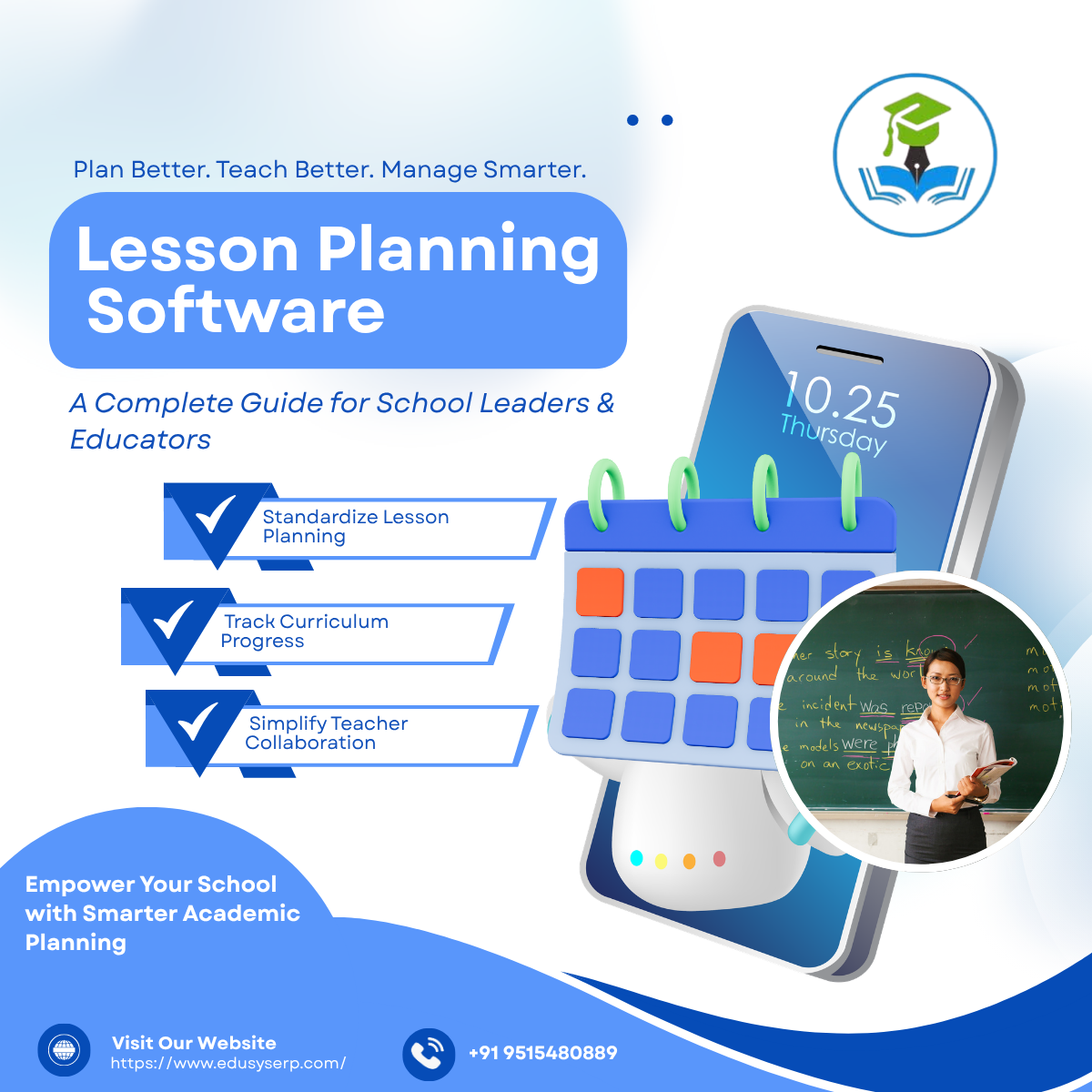
Lesson Planning Software: A Complete Guide for School Leaders, Principals, and Educational Institutions
In today's rapidly evolving education landscape, maintaining consistent teaching quality across classrooms is one of the biggest challenges for educational institutions. While teachers focus on delivering engaging lessons, school leaders are responsible for ensuring curriculum consistency, academic excellence, compliance, and measurable student outcomes.
Yet many schools still rely on paper-based lesson plans, spreadsheets, or disconnected documents. These methods often lead to inconsistent teaching practices, limited visibility into curriculum progress, and increased administrative effort. This is where lesson planning software becomes an essential tool not just for teachers, but for principals, academic coordinators, department heads, and school management.
More than a digital notebook, lesson planning software enables institutions to standardize instructional planning, monitor curriculum coverage, foster collaboration, and make data-driven academic decisions. This guide explains what lesson planning software is, why educational institutions need it, the features to look for, and how it supports long-term academic success.
What Is Lesson Planning Software?
Lesson planning software is a digital platform that enables educators to create, organize, review, approve, and manage lesson plans in a centralized system.
Unlike traditional documents or spreadsheets, modern lesson planning software connects lesson plans with curriculum standards, academic calendars, assessments, and teaching resources.
It serves multiple stakeholders:
● Teachers prepare and organize lessons.
● Academic coordinators review and monitor instructional quality.
● Principals gain visibility into curriculum implementation.
● Department heads ensure consistency across subjects.
● School management tracks academic performance and institutional goals.
Instead of working in isolation, everyone collaborates within a structured academic framework.
Why Lesson Planning Matters to School Leadership
Many people think lesson planning is solely a teacher's responsibility. In reality, it is a strategic process that directly influences institutional performance.
For school leaders, lesson planning provides answers to critical questions:
● Is the curriculum being completed on time?
● Are all classes receiving consistent instruction?
● Are teachers aligned with academic objectives?
● Are students receiving equal learning opportunities?
● Can the institution demonstrate academic quality during inspections or accreditation?
Without a structured planning process, these questions are difficult to answer.
Challenges of Traditional Lesson Planning
Many institutions continue to use manual methods that create unnecessary complexity.
1. Inconsistent Lesson Formats
Each teacher may prepare lesson plans differently, making it difficult for coordinators to review and compare instructional approaches.
2. Limited Visibility
Academic leaders often have no real-time insight into whether lesson plans have been prepared or whether the syllabus is progressing as expected.
3. Paper-Based Documentation
Printed lesson plans can be misplaced, damaged, or difficult to access when needed for reviews or audits.
4. Lack of Collaboration
Teachers working independently may duplicate efforts instead of sharing resources, ideas, and best practices.
5. Time-Consuming Reviews
Reviewing dozensor even hundredsof lesson plans manually consumes valuable administrative time.
6. Difficulty Tracking Curriculum Completion
Without centralized records, it becomes challenging to identify delays or gaps in syllabus coverage.
Benefits of Lesson Planning Software
Standardized Teaching Practices
Using common templates ensures that every teacher follows institutional guidelines while still allowing flexibility for individual teaching styles.
● Consistency improves learning quality across classrooms.
● Better Curriculum Alignment
● Lesson plans can be mapped directly to curriculum objectives, ensuring that teaching remains aligned with institutional and regulatory requirements.
● Academic coordinators can quickly identify missing topics or incomplete units.
●
● Improved Collaboration
Teachers can:
● Share lesson templates
● Exchange teaching resources
● Collaborate across departments
● Learn from experienced colleagues
● This encourages continuous professional development.
Increased Administrative Visibility
School leaders gain real-time insights into:
● Lesson plan submissions
● Pending approvals
● Curriculum completion
● Teacher preparedness
● Department performance
This supports proactive academic management rather than reactive problem-solving.
Reduced Administrative Work
Automation eliminates repetitive tasks such as:
● Collecting paper lesson plans
● Email follow-ups
● Manual approval tracking
● Physical storage
● Duplicate documentation
Staff can spend more time supporting teaching and learning.
Enhanced Accountability Digital records create transparency.
Administrators can easily verify:
● When lesson plans were submitted
● Who approved them
● Curriculum coverage
● Revisions and updates
This simplifies internal reviews and accreditation processes.
Key Features to Look for in Lesson Planning Software
When evaluating lesson planning software, educational institutions should consider the following capabilities:
1. FeatureWhy It Matters
2. Lesson plan templates Standardizes planning across departments
3. Curriculum mappingAligns lessons with learning objectives
4. Academic calendar integrationKeeps planning synchronized with schedules
5. Approval workflowsSupports quality assurance
6. Resource libraryCentralizes teaching materials
7. Collaboration toolsEncourages teamwork among teachers
8. Progress trackingMonitors syllabus completion
9. Analytics dashboardProvides leadership insights
10. Mobile accessibilityEnables planning from anywhere
11. Role-based permissionsProtects sensitive academic data
How Different Stakeholders Benefit Principals
Principals gain institution-wide visibility into academic planning.
They can:
● Monitor teaching consistency
● Identify curriculum gaps
● Improve instructional quality
● Support teacher development
Academic Coordinators
Coordinators can:
● Review lesson plans efficiently
● Track syllabus completion
● Provide timely feedback
● Ensure curriculum alignment
Teachers
Teachers benefit from:
● Ready-to-use templates
● Shared teaching resources
● Faster lesson preparation
● Easier collaboration
● Organized planning
School Management
Management teams receive valuable academic data that supports strategic decisions and continuous improvement.
● Lesson Planning Software vs Traditional Planning
● Traditional Planning Lesson Planning Software
● Paper files Cloud-based platform
● Individual documents Centralized repository
● Manual approvals Automated workflows
● Difficult collaboration Real-time collaboration
● Limited visibility Live dashboards
● Time-consuming reviews Streamlined review process
● Risk of lost documents Secure digital storage
● Minimal reporting Comprehensive analytics
Frequently Asked Questions
1. What is lesson planning software?
Lesson planning software is a digital platform that helps educational institutions create, organize, review, and manage lesson plans while supporting curriculum alignment and academic oversight.
2. Who uses lesson planning software?
Teachers, principals, academic coordinators, department heads, colleges, universities, and school management teams all benefit from its features.
3. Is lesson planning software only for schools?
No. It can also support colleges, universities, vocational institutes, and training organizations.
4. What are the biggest benefits?
● Improved teaching consistency
● Better curriculum management
● Reduced paperwork
● Enhanced collaboration
● Greater visibility for academic leaders
● Easier quality assurance
5. Can lesson planning software integrate with other systems?
Many solutions integrate with student information systems, learning management systems, attendance platforms, timetables, assessment tools, and broader school management software.
 11 Aug 2026
Useful Links
Social media